
How to Keep Air Ducts Clean in Delray Beach After a Professional Service
You notice it a few days after the technician leaves: the air moving through your vents smells noticeably fresher, and the supply registers no longer have that faint gray rim of settled dust. That moment is exactly when the maintenance clock starts. In Delray Beach, where the AC runs nearly year-round and the Atlantic humidity never fully lets up, what you do in the weeks and months after a professional duct cleaning determines how long that freshness actually lasts. This checklist gives you a practical, room-by-room framework to protect the investment.
Filter Selection and Replacement Checklist
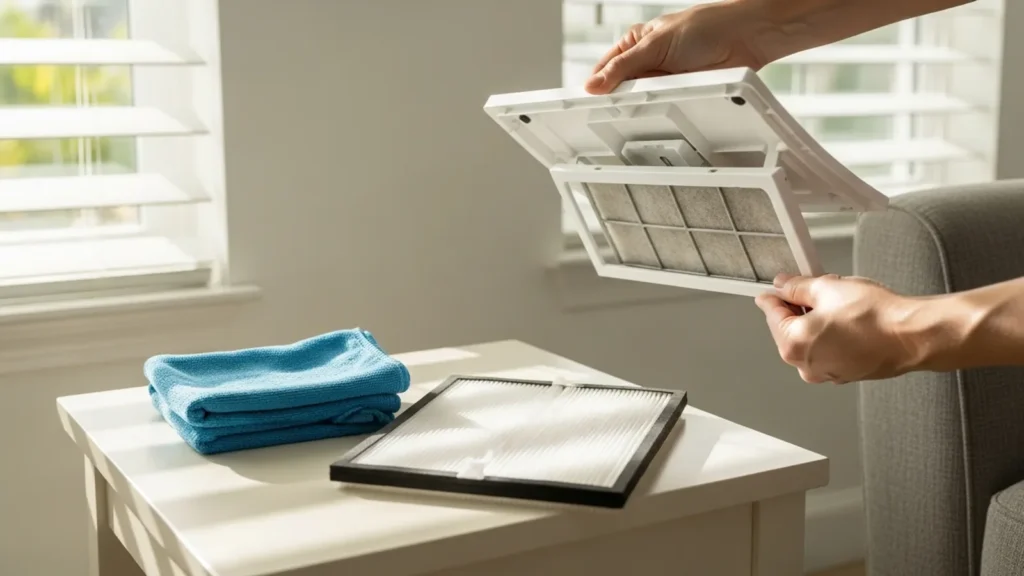
Your air filter is the first line of defense between the outside world and the interior of your duct system. Getting this right matters more than almost anything else on this list.
- Choose a filter rated MERV 8 to MERV 11 for most Delray Beach residential systems, high enough to capture fine dust and pollen, low enough not to restrict airflow and strain your blower motor.
- Check the filter every 30 days during peak cooling season (roughly April through October in South Florida), not just quarterly.
- Replace the filter immediately if you can no longer see light through it when held up to a window, regardless of how recently it was installed.
- Write the installation date on the filter frame with a marker so there is no guessing during the next inspection.
- Keep one spare filter on hand at all times so a replacement is never delayed by a hardware store run.
- If your home has multiple return-air grilles, confirm each one has a properly seated filter and that none are running without one.
- Avoid stacking two filters in a single slot to “catch more”, the restricted airflow causes more harm than the extra filtration prevents.
- If anyone in the household has significant dust sensitivity, ask your HVAC technician whether your system can handle a MERV 13 filter before upgrading, since not all residential units can move air efficiently through higher-density media.
Humidity Management Checklist
Moisture is the variable that separates a Delray Beach duct system from one in a dry climate. Humidity feeds microbial growth inside ductwork far faster than dust alone. Managing indoor relative humidity is one of the most impactful things a homeowner can do after a professional cleaning. For a deeper look at what unchecked moisture can do inside your system, see how humidity affects your Delray Beach duct system.
- Keep indoor relative humidity between 45% and 55% year-round, use an inexpensive digital hygrometer placed in a central room to monitor it.
- Run the AC fan on “auto” rather than “on” so the evaporator coil has time to drain condensation between cycles instead of recirculating damp air continuously.
- Inspect the condensate drain line every three months; a slow or blocked drain raises the moisture level inside the air handler and adjacent ductwork.
- Pour a small amount of diluted white vinegar into the condensate drain access port periodically to help prevent algae buildup that causes clogs (a common issue in South Florida’s warm climate).
- Check that bathroom exhaust fans vent fully to the exterior, not into the attic, moist attic air infiltrates duct joints and raises system humidity.
- If your home consistently reads above 60% relative humidity indoors even with the AC running, discuss a whole-home dehumidifier option with your HVAC technician.
- After heavy rain events, check for any visible condensation on supply vents, which can signal a duct insulation gap or an undersized system struggling to dehumidify.
Vent and Register Maintenance Checklist
The registers and grilles at the end of every duct run are the easiest part of the system to maintain yourself, and keeping them clean reduces the amount of debris that migrates back into the duct interior.
- Wipe down supply and return register covers with a damp microfiber cloth every two to four weeks, especially in rooms with ceiling fans that keep dust airborne.
- Remove register covers entirely every three to four months, wash them with mild soap and water, and dry them fully before reinstalling.
- Vacuum the first few inches of each duct opening with a brush attachment while the covers are off, this removes surface accumulation before it migrates deeper.
- Check that all supply registers are fully open and unobstructed by furniture, rugs, or drapes; blocked registers create pressure imbalances that pull more dust-laden air through gaps in the duct system.
- Inspect register damper blades for damage or warping that prevents a proper seal when the register is set to partially closed.
- If a register cover has corroded or the fins are bent beyond cleaning, replace it, a damaged cover lets debris enter the duct more easily.
Whole-Home Habits That Protect Your Ducts
Duct cleanliness is partly a product of what happens in the rest of the home. These habits reduce the volume of particulates that the system has to process in the first place.
- Vacuum carpeted areas at least twice a week using a vacuum with a HEPA-rated filter so fine particles are captured rather than re-suspended.
- Use a microfiber mop on hard floors rather than a dry broom, which lifts dust into the air where the return grilles pull it directly into the duct system.
- Groom pets outdoors when possible, and wash pet bedding weekly, pet dander and hair are among the fastest ways to load a filter in a South Florida home.
- Run kitchen and bathroom exhaust fans during and for at least 10 minutes after cooking or showering to exhaust moisture and grease particles before they circulate.
- Keep garage doors closed when the AC is running; garages in Delray Beach accumulate fine construction dust, fertilizer particles, and vehicle exhaust that enter the living space and eventually the duct system.
- After any indoor renovation work (painting, sanding, tile cutting), change the air filter immediately rather than waiting for the scheduled replacement date.
- Seal any visible gaps around light fixtures in the ceiling with fire-rated caulk; unsealed attic bypasses pull hot, humid attic air directly into the return plenum.
Delray Beach-Specific Considerations
Delray Beach sits in Palm Beach County’s coastal zone, which creates a specific set of conditions that affect how quickly a duct system accumulates debris and moisture. These checklist items address the local environment directly.
- Many Delray Beach homes built before the mid-1980s use flex duct runs with inner liners that can sag or separate over time; inspect accessible flex sections in the attic annually for kinks or disconnected joints that allow conditioned air (and moisture) to leak into the attic space.
- Salt air from the Atlantic accelerates corrosion on metal duct components, register hardware, and air handler cabinets; wipe down exterior metal surfaces of the air handler annually and watch for rust spots that indicate moisture intrusion.
- Delray Beach’s extended pollen season (sea grape, Australian pine, and Brazilian pepper are all heavy producers in the area) means filter loading accelerates in late winter and spring; plan an extra filter check in February and again in April.
- Homes in the barrier island neighborhoods and along the Intracoastal face higher ambient humidity than properties further west toward Military Trail; residents in those zones may need to run a portable or whole-home dehumidifier during the summer wet season to keep indoor RH below 55%.
- If your home uses a concrete block construction common in older Delray Beach neighborhoods, check that attic insulation has not shifted to expose duct sections to direct radiant heat, which stresses duct joints and increases condensation risk.
- Dryer vents in South Florida’s humid climate can accumulate lint faster than in drier regions; keeping that system separate and clear also reduces overall particulate load in the home. For context on how dryer vent maintenance relates to your air duct system, see dryer vent vs. air duct cleaning in Delray Beach.
Scheduling Your Next Professional Service
Even with consistent maintenance, professional cleaning remains a necessary part of the cycle. Knowing when to call keeps you from either over-scheduling (unnecessary expense) or under-scheduling (losing the gains from your last service).
- Mark a calendar reminder for 18 to 24 months after your most recent professional cleaning as a starting point for reassessment in a well-maintained Delray Beach home.
- Move that date forward to 12 months if any of the following apply: a major renovation, a new pet, a household member with significant respiratory sensitivity, or a visible mold issue anywhere in the home.
- Inspect your filter at the six-month mark after a professional service; if it is loading significantly faster than it did in the months immediately after cleaning, that is a signal that debris is re-entering the duct system from a gap or a compromised section.
- If you notice a return of musty odors from the vents, visible dust rings reappearing on supply registers within weeks of cleaning them, or a measurable drop in airflow from specific registers, schedule a follow-up inspection rather than waiting for your next routine service date.
- When you are ready to schedule, reviewing what goes into the service and what drives the overall cost helps you compare quotes accurately. The air duct cleaning cost guide for Delray Beach covers local pricing factors in detail so you know what questions to ask.
Frequently Asked Questions
How often should I change my air filter in Delray Beach compared to other climates?
Because Delray Beach AC systems run for more months of the year than systems in cooler climates, filters accumulate debris faster. A monthly visual check is more practical here than the standard 90-day guidance written for regions with shorter cooling seasons. Replace based on what you see, not strictly on a calendar.
Can I clean my own air ducts between professional services?
Light maintenance at the register level, including wiping covers and vacuuming the first few inches of the duct opening, is reasonable for homeowners. Deep cleaning of the main trunk lines, plenums, and the air handler interior requires professional equipment and technique; attempting it without the right tools can dislodge debris further into the system rather than removing it.
What indoor humidity level should I aim for in a Delray Beach home?
Most HVAC and indoor air quality guidelines point to 45% to 55% relative humidity as a comfortable and protective range. In Delray Beach’s wet season (June through September), maintaining the lower end of that range is preferable, since conditions outside can push ambient humidity well above 80% and that pressure works against your system continuously.
Consistent maintenance after a professional duct cleaning extends the life of the service and keeps your system working efficiently through Delray Beach’s long cooling season. When the time comes for your next professional visit, schedule your Delray Beach duct cleaning service with Express Air Duct Cleaning Delray Beach to keep the cycle going.